Calcium chloride offers a concentrated, rapidly dissociating source of calcium, but its value depends on the salt form, route of administration, hydration state and quality controls. By the end, you will be able to compare anhydrous and dihydrate material, assess production risks, and qualify a supplier against your finished product requirements.
Key takeaways
- Use calcium chloride for rapid intravenous calcium replacement and controlled formulation processes.
- Recalculate elemental calcium when switching between anhydrous and dihydrate grades.
- Control heat, moisture, concentration, sterility, and administration rate.
- Qualify suppliers through identity testing, CoA review, traceability, and lot-specific testing.
Which pharmaceutical uses make calcium chloride valuable?
Calcium chloride is valuable in medicines when you need rapid intravenous calcium replacement, especially for acute hypocalcaemia or another electrolyte disturbance requiring a concentrated calcium source. Its calcium ions also support formulation and manufacturing processes where controlled ionic strength, precipitation, or calcium-dependent processing is required.
The main pharmaceutical calcium chloride benefits are its high elemental-calcium proportion and ready dissociation in solution. Anhydrous calcium chloride provides about 36.1% elemental calcium; the dihydrate provides about 27.2%.
A labeled 10% injection commonly contains 1 g of calcium chloride dihydrate in 10 mL, equivalent to about 6.8 mmol or 272 mg of elemental calcium, but the approved label controls the salt form, concentration, and administration instructions.
| Option | Key advantage | When it applies |
|---|---|---|
| Calcium chloride | Higher elemental-calcium proportion; dissociates readily | Rapid, controlled intravenous replacement |
| Calcium gluconate | Lower calcium concentration with a wider administration margin | Intravenous replacement when tissue-injury risk must be reduced |
| Calcium citrate | Oral calcium source with better gastrointestinal tolerability | Oral supplementation, not intravenous emergency replacement |
Injectable calcium chloride belongs only in an approved intravenous product and is not interchangeable with an oral ingredient or another calcium salt. Its higher concentration does not make it automatically superior: extravasation can cause severe tissue injury, so trained staff must administer it under controlled conditions.
For calcium chloride for benefits pharmaceutical production in Vadodara, specify the intended route, formulation, hydrate form, assay basis, and pharmacopoeial grade rather than choosing on calcium content alone.
How do anhydrous and dihydrate calcium chloride change formulation calculations?
Use the hydrate form named in the formula: anhydrous calcium chloride is not mass-for-mass interchangeable with calcium chloride dihydrate. Anhydrous material has molecular weight 110.98 and CAS No. 10043-52-4; the dihydrate has molecular weight 147.01 and CAS No. 10035-04-8.
Formulation calculations differ as follows:
| Form | Molecular weight | Approximate elemental calcium | Conversion |
|---|---|---|---|
| Anhydrous calcium chloride | 110.98 | 36.1% | 1 kg equals 1.325 kg dihydrate |
| Calcium chloride dihydrate | 147.01 | 27.2% | 1 kg equals 0.755 kg anhydrous |
Thus, 1 kg of dihydrate supplies the same calcium chloride molar amount as about 0.755 kg of anhydrous material, before correcting for assay. Apply the supplier’s assay on the declared hydrate basis, not to a nominal mass copied between forms.
A formula stating only “10% calcium chloride” is incomplete. It must identify the salt form, concentration convention and assay basis. A commonly labeled 10% injection contains 1 g of calcium chloride dihydrate in 10 mL, delivering about 6.8 mmol, or 272 mg, of elemental calcium per 10 mL; the approved product label remains decisive.
These pharmaceutical calcium chloride benefits depend on accurate conversion, while calcium chloride pharmaceutical uses depend on the approved formulation and route.
Keep the same hydrate basis in the purchase specification, batch record, dispensing sheet, assay calculation and finished-product release record. Otherwise, the recorded mass can appear correct while the delivered calcium is wrong.
What safety and process controls are needed during manufacture and administration?
Rapidly dissolving calcium chloride in a small water volume can cause local boiling, splashing and concentration gradients because the process is strongly exothermic. Control the addition rate, mixing, vessel temperature and cooling capacity; never charge the full solid quantity at once.
Calcium chloride pharmaceutical uses are only reliable when the process protects the formulation and operators.
Calcium chloride is hygroscopic and can become wet or deliquescent. Use moisture-barrier inner liners, tightly closed containers and limited dispensing exposure; after abnormal storage, reassess assay, flow and hydrate state before use. These controls preserve pharmaceutical calcium chloride benefits beyond the nominal shelf life.
| Route | Control | Main risk |
|---|---|---|
| Calcium chloride injection | Slow intravenous injection or infusion by trained medical staff, as directed by the approved label | Extravasation can cause severe irritation, tissue necrosis or calcification |
| Calcium gluconate | Use the approved product and route; do not substitute by mass | Lower tissue-injury risk does not remove administration controls |
| Intramuscular or subcutaneous calcium chloride | Contraindicated | Local deposition and extravasation can damage tissue |
Test compatibility at the actual concentration, diluent, temperature and contact time. Carbonates, bicarbonates, phosphates, sulfates and some medicines form insoluble calcium salts; ceftriaxone-calcium precipitation is a high-risk interaction, particularly in neonates.
For sterile products, an incoming certificate of analysis does not prove sterility or freedom from pyrogens: qualified water, validated sterilization or aseptic processing, container-closure integrity, endotoxin limits and particulate controls remain necessary.
How should you qualify a calcium chloride supplier in Vadodara?
Accept a local source only after the purchase specification defines the material and its destination. Name IP, USP–NF, Ph. Eur. or BP; anhydrous or dihydrate form; assay basis; water limit; impurity limits; packaging; and written change-notification requirements. A technical or food-grade material is not a substitute for pharmaceutical grade.
- Assay and identification on the declared hydrate basis
- Water content or loss on drying
- Insoluble matter and acidity or alkalinity
- Relevant elemental impurities and heavy metals where applicable
- Microbial quality and bacterial endotoxin requirements for the intended use
- Manufacturing site, applicable authorization, lot traceability and retention samples
2. Read the certificate of analysis against the container and purchase order. Match the product name, grade, lot or batch number, test methods, specification limits, manufacturing date, retest or expiry date and authorized approval. A missing batch match breaks traceability.
3. Audit the supplier’s quality system, deviation history, complaint handling and change-control process. Require notification before a site, process, specification, test method, packaging or raw-material change reaches your production line.
A calcium chloride manufacturer in Gujarat is suitable only after these checks; Gujarat origin proves logistics, not pharmaceutical suitability. Apply the same standard when comparing a calcium chloride supplier in Vadodara, including Halogens.
For export batches, verify the registered destination dossier separately because its hydrate definition, impurity limit, method or packaging may differ from IP or another standard.
Related product
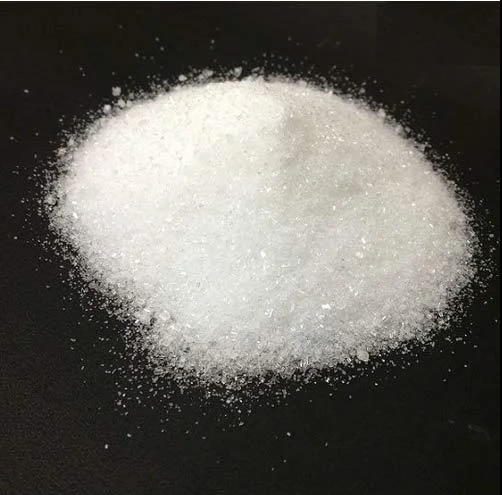 | Pharmaceutical Grade : IP/USP Synonyms: calcium dichloride; calcium chloride anhydrous; Caltac; Dowflake CAS No.: 10043-52-4 Molecular Weight: 110.98 Chemical... View product → |
How do you decide whether a lot fits the finished pharmaceutical product?
A passing assay lot fits only when it matches the approved finished dosage form, route, label and market. Calcium chloride pharmaceutical uses do not justify accepting a generic assay alone; pharmaceutical calcium chloride benefits depend on the declared hydrate, concentration, diluent and co-processed ingredients.
For calcium chloride benefits in pharmaceutical production in Vadodara, the release decision must connect the incoming specification to the medicine’s registered formulation.
| Release question | Evidence required | What failure means |
|---|---|---|
| Formulation identity | Anhydrous or dihydrate form, assay basis, approved concentration and label | Correct assay on the wrong hydrate can produce the wrong calcium dose |
| Sterile suitability | Qualified water, validated sterilization or aseptic processing, bacterial-endotoxin and particulate results, container-closure integrity | A clean certificate of analysis does not prove sterility or pyrogen-free status |
| Compatibility and handling | Compatibility with the diluent and every co-processed ingredient; controlled transfer, filling and line clearance | Precipitate, residue or calcium chloride exposure can create an extravasation risk |
| Market compliance | Comparison with the registered destination dossier and IP, USP–NF, Ph. Eur. or BP requirement | A lot passing one standard can fail on hydrate definition, impurity limit, method or packaging |
Before release, reconcile these records:
- Purchase order and approved raw-material specification
- Batch record, dispensing calculation and certificate of analysis
- Approved label, container closure and packaging configuration
- Change-control commitments, including notification of site, process, method or material changes
Export release needs its own documented comparison, not an assumption that Indian acceptance transfers automatically.
Frequently asked questions
Which pharmaceutical uses make calcium chloride valuable?
Calcium chloride is used for rapid intravenous calcium replacement in acute hypocalcaemia and other electrolyte disturbances. Calcium ions also support selected formulation and manufacturing processes involving ionic strength, precipitation, or calcium-dependent processing.
How do anhydrous and dihydrate calcium chloride change formulation calculations?
Anhydrous calcium chloride contains no bound water, while calcium chloride dihydrate includes two water molecules per formula unit. Recalculate the weighed mass, calcium-ion concentration, and final water balance when changing forms.
What safety and process controls are needed during manufacture and administration?
Control moisture exposure, dissolution heat, concentration, compatibility, sterility, container integrity, and administration rate. Confirm the intended route and monitor for tissue injury risks during intravenous administration.
How should you qualify a calcium chloride supplier in Vadodara?
Review the supplier's quality system, manufacturing controls, traceability, packaging, change-notification process, and lot-specific certificate of analysis. Confirm identity, assay, water content, impurities, and the pharmacopoeial or internal specification required for your product.
How do you decide whether a lot fits the finished pharmaceutical product?
Compare the lot's test results and documentation with your approved material specification, formulation calculation, compatibility requirements, and release controls. Quarantine and investigate any missing, inconsistent, or out-of-specification result before use.