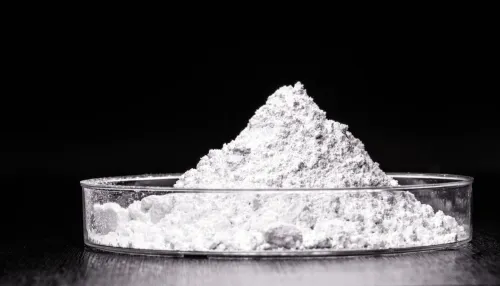
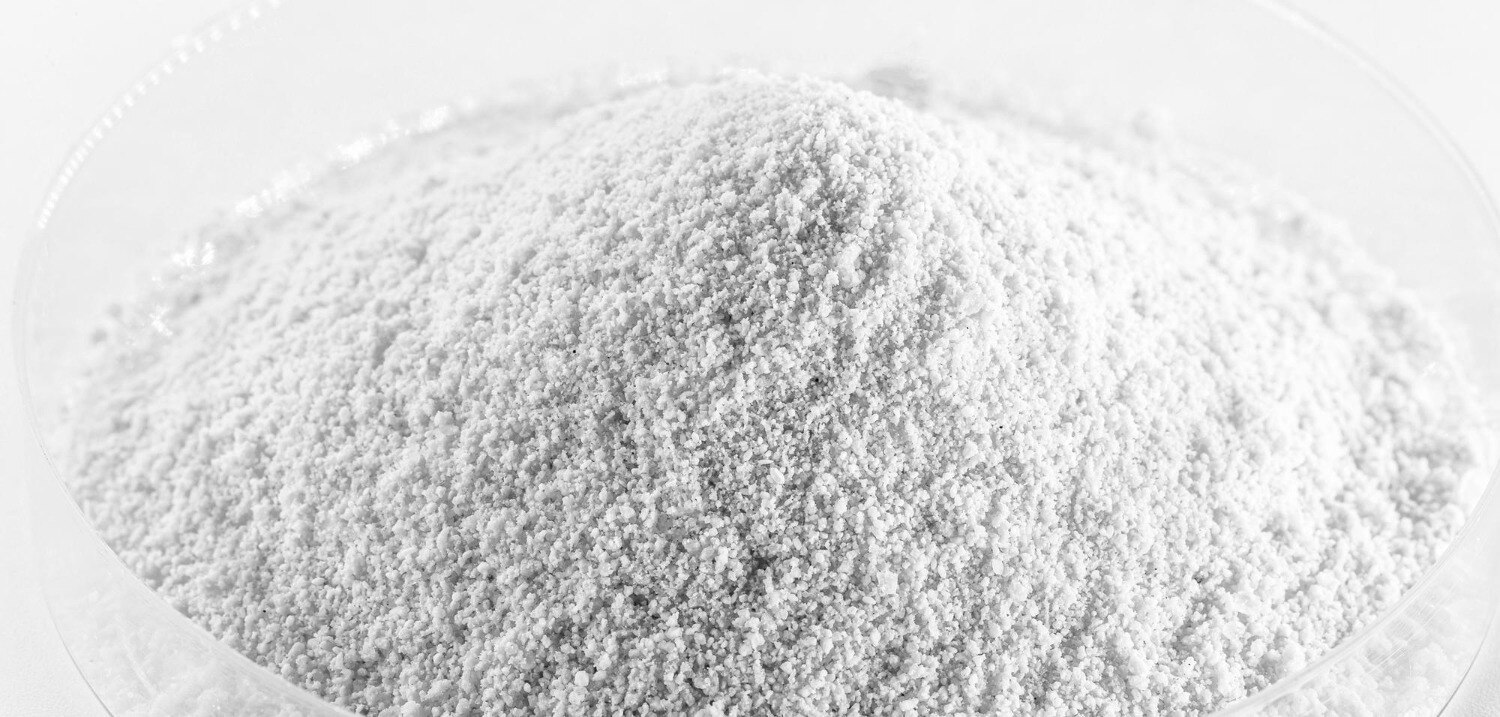
Pharmaceutical barium sulphate is usually produced by reacting a soluble barium salt with a soluble sulphate source, then washing, drying, and conditioning the precipitated powder. By the end, you will be able to trace each manufacturing stage, identify the controls that protect against soluble barium and particle-size problems, and judge whether a Vadodara or Gujarat supplier has provided enough evidence for pharmaceutical use.
Key takeaways
- Request the supplier’s process flow and starting-material specifications.
- Control precipitation, washing, drying, and milling to limit contamination.
- Review assay, heavy metals, particle size, and microbiological test results.
- Ask for the batch certificate, GMP evidence, and licence documentation.
Which chemical route produces pharmaceutical barium sulphate?
Vadodara does not determine the synthesis route. The phrase barium sulphate pharmaceutical manufacturing process in vadodara identifies a location, not a standard method; require the supplier’s process flow, starting-material specifications, impurity profiles, and GMP evidence. A plant in Gujarat can use the same precipitation chemistry as a plant elsewhere.
The usual route combines a qualified soluble barium salt, such as barium chloride, with a qualified soluble sulphate source, such as sodium sulphate:
BaCl₂ + Na₂SO₄ → BaSO₄↓ + 2NaCl
The insoluble barium sulphate precipitates from solution while sodium chloride remains dissolved. This is controlled precipitation followed by purification and powder processing, not the drying of a naturally occurring mineral. Approve each raw-material supplier, check certificate data against incoming tests, and control process-water conductivity, microbial quality, and relevant ionic impurities.
Pay particular attention to soluble barium, chloride, sulphate, sodium, and metals.
The intended use must be fixed before setting specifications. A powder for a contrast formulation, a suspension concentrate, and another dosage-form input can need different particle-size distribution, surface behaviour, bulk density, microbial limits, and packaging controls even when assay is similar.
Use this distinction when evaluating a supplier:
| Claim | What it establishes | What it does not establish |
|---|---|---|
| Vadodara manufacture | Production location | Reaction route or quality |
| “Precipitated” grade | Formation by precipitation | Adequate washing or soluble-barium control |
| Pharmaceutical use | Intended application | Compliance without an approved specification |
How are precipitation and washing controlled?
A clean, consistent precipitate comes from controlling supersaturation rather than simply combining two solutions. In pharmaceutical barium sulphate production, each batch follows defined operating ranges so nucleation, crystal growth, agglomeration, and reproducibility remain predictable.
- pH controls the precipitation environment; drift changes nucleation rate and particle surface chemistry.
- Reaction temperature affects crystal growth and slurry viscosity; unstable temperature produces variable particle size.
- Feed concentration controls supersaturation; excessive concentration promotes rapid nucleation and fine particles.
- Addition rate controls where supersaturation forms; a fast feed creates local agglomerates before mixing can equalise the slurry.
- Mixing intensity distributes reactants; insufficient mixing leaves concentration gradients, while excessive shear can alter agglomerate structure.
- Residence time allows precipitation and crystal growth to reach the defined endpoint before filtration.
- Endpoint control uses stoichiometric addition and testing for residual barium or sulphate, preventing excess reactant from entering the wash burden.
The slurry then passes to filtration or another dewatering step to form a cake. Repeated washing, or displacement washing through the cake, removes chloride, nitrate, sodium, excess sulphate, and soluble barium; wash volume, contact time, flow direction, and conductivity or ion testing determine completion.
Water-soluble barium requires its own limit and result. Total barium largely reflects insoluble barium sulphate, whereas soluble barium represents dissolved barium species with different toxicological significance; a high total-barium result cannot prove adequate soluble-barium removal. Consistent cake washing therefore matters as much as the precipitation reaction itself.
How is the washed cake converted into a usable pharmaceutical powder?
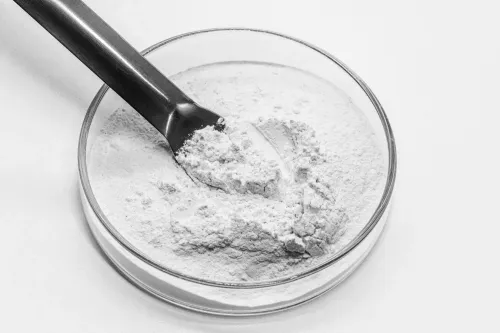
Filtration leaves a wet cake, not a usable pharmaceutical powder. Controlled drying must remove water without creating hard agglomerates: excessive temperature can alter surface hydration and dispersion, while excessive airflow can dry the outer layer faster than the interior.
Control these powder-conversion decisions:
- Set drying temperature, airflow, loading depth, and endpoint residual moisture; confirm the endpoint by loss on drying or a validated water method.
- Use clean, qualified dryers, mills, sieves, blenders, and containers; residue from a previous product can introduce elemental or microbial contamination.
- Apply enough mechanical energy to break soft agglomerates, but not so much that milling changes surface properties, generates contamination, or creates an unwanted fine fraction.
- Define particle-size distribution with a sampling plan, sample preparation procedure, analytical method, D-values such as D10, D50, and D90, or stated sieve limits.
- Remove or reprocess oversize material under a written procedure; do not return it blindly to the batch.
- Blend only under a defined time, load, and order of addition, then pack in sealed, traceable containers that protect the powder from moisture.
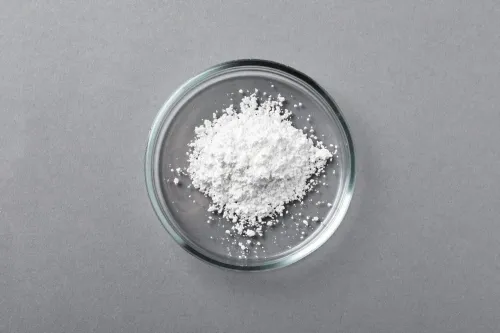
Particle size affects sedimentation, viscosity, redispersibility, mouthfeel, and uniform X-ray attenuation. Pharmaceutical barium sulphate production therefore ties the powder specification to its intended use, not merely to assay.
Bulk powder is not a finished oral or rectal contrast product. The finished product needs separate controls for vehicle, wetting or suspending system, viscosity, sedimentation, redispersibility, flavour, radiopacity, and microbial quality.
What tests show that the powder is pharmaceutical grade?
A pharmaceutical-grade claim is not proved by a high barium sulphate assay alone. The powder must match a defined intended use, approved specification, controlled process, and complete batch record; this is the key distinction in barium sulphate bulk manufacturing in Gujarat.
| Grade | Process control and impurities | Intended use and evidence |
|---|---|---|
| Pharmaceutical | Qualified feedstocks, controlled washing, validated or verified tests, elemental-impurity risk assessment, traceability, and release records | Dosage-form input; monograph or approved specification, representative COA, and microbial data |
| Industrial | Assay and physical properties may be controlled, but soluble salts, microbial quality, and process documentation can have different limits | Pigments, fillers, drilling fluids, or other technical applications |
| Laboratory | Reagent purity and identity support analytical work; packaging and lot documentation serve laboratory handling | Testing and research, not automatic suitability for ingestion or formulation |
Ask for results for:
- Identification and assay or purity
- Particle-size distribution, including D-values or sieve limits
- Loss on drying or water
- Water-soluble substances and soluble barium
- Relevant chloride or sulphate limits
- Heavy metals or specified elemental impurities
- Microbial limits
- Bulk density when the customer specification or monograph requires it
Read IP, BP, EP, and USP separately. A batch meets the monograph or approved specification it actually claims; one certificate of analysis does not prove compliance with all four pharmacopoeias.
Elemental impurities can enter through barium feedstocks, process water, filters, mills, or packaging, so the supplier needs a documented risk assessment and controls, not only one end-product test. The claimed pharmaceutical use also determines particle size, microbial limits, bulk density, and packaging requirements.
What should a Vadodara buyer request before approving a batch?
Approve a batch only after the supplier links its test results to the exact material packed, not merely to a “pharma grade” label.
1. Request a representative certificate of analysis showing the batch number, manufacturing date, ordered grade, test methods, individual results, and release limits. Check identity, purity, water or loss on drying, particle-size distribution, soluble barium, soluble chloride or sulphate, elemental impurities, and microbiological quality against the agreed specification.
2. Obtain the current specification sheet, safety data sheet, packaging configuration, and traceability record from approved raw-material lots through the finished pack. The traceability record should identify barium and sulphate sources, process-water controls, equipment, operators or review steps, and pack numbers.
3. Ask for the assigned retest date or expiry date and its justification, including stability data, storage temperature, container-closure suitability, and the period supported by evidence. Confirm that the proposed drums or bags protect the powder from moisture, contamination, and mix-ups.
4. Review evidence of approved raw-material suppliers, executed batch records, validated or verified analytical methods, cleaning controls, deviation investigations, change-control history, and a documented quality-control release procedure. For a barium sulphate pharmaceutical manufacturer in Vadodara, ICH Q7-aligned controls provide a useful benchmark when the material is handled within an active-substance quality system.
For barium sulphate bulk manufacturing in Gujarat, compare several batches for soluble-barium results and particle-size consistency, not just assay. Halogens adds value only when it supplies this evidence and demonstrates a reproducible process on the same validated route intended for your order.
Related product
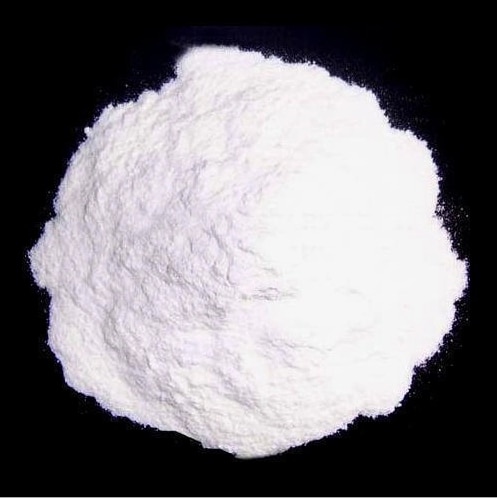 | Pharmaceutical Grade : IP/BP/EP/USP CAS number : 7727-43-7 Hill Formula : BaO4S Chemical formula : BaSO4 View product → |
Frequently asked questions
Which chemical route produces pharmaceutical barium sulphate?
Manufacturers commonly precipitate insoluble barium sulphate by reacting a soluble barium salt with a soluble sulphate source, then separate and purify the solid. Request the exact process flow, raw-material specifications, and impurity profile.
How are precipitation and washing controlled?
The manufacturer controls reagent identity, concentration, addition rate, mixing, temperature, endpoint, and filtration. Repeated washing removes soluble salts and residual process chemicals; records should show wash controls and in-process checks.
How is the washed cake converted into a usable pharmaceutical powder?
After filtration, the cake is dried under controlled conditions, de-lumped or milled, and sieved to achieve the agreed particle-size range. The process must prevent foreign matter, moisture uptake, and cross-contamination.
What tests show that the powder is pharmaceutical grade?
Review identity, assay or purity, soluble barium, sulphate-related impurities, heavy metals, loss on drying, residue on ignition, particle-size distribution, microbiological quality, and appearance against the agreed specification.
What should a Vadodara buyer request before approving a batch?
Request the certificate of analysis, batch number, manufacturing and retest dates, process and storage details, safety data sheet, specification, GMP evidence, and the supplier’s applicable manufacturing licence copy.
Keywords