Calcium acetate serves a specific pharmaceutical purpose: it supplies calcium and binds dietary phosphate in oral medicines for hyperphosphataemia associated with chronic kidney disease. By the end, you will be able to assess its clinical suitability, manufacturing controls, documentation and the supply-chain evidence required from a Vadodara or Gujarat supplier.
Key takeaways
- Calcium acetate binds dietary phosphate in the gut for dialysis medicines.
- Calculate elemental calcium before comparing calcium acetate with other calcium salts.
- Check identity, assay, impurities, moisture and microbiological results on every batch.
- Qualify Vadodara suppliers by licences, traceability, documentation and continuity plans.
How calcium acetate works as a pharmaceutical phosphate binder
Calcium acetate is an active pharmaceutical ingredient in oral phosphate-binding medicines for hyperphosphataemia in patients with chronic kidney disease, especially those on dialysis. It supplies calcium that reacts with phosphate from food to form relatively insoluble calcium phosphate, reducing phosphate absorption into the bloodstream.
This is why timing matters: take the medicine with meals or snacks containing phosphate. Food places the binder beside dietary phosphate in the gastrointestinal tract; taken between meals, calcium acetate has little dietary phosphate to capture, so the same dose will not provide the same phosphate control.
Its pharmaceutical role is not the same as supplying a routine calcium supplement or serving as a general-purpose excipient. The main calcium acetate pharmaceutical uses centre on this oral API; laboratory, food, water-treatment and industrial uses do not establish suitability for a medicine.
The pharmaceutical calcium acetate benefits are phosphate reduction and a calcium-based binding mechanism.
Product labeling requires serum calcium monitoring because excess calcium can cause hypercalcaemia. Calcium-containing antacids or supplements can increase that risk, so prescribers and formulators must account for total calcium exposure, not just phosphate binding. A finished product therefore needs clear meal-use and safety instructions.
Dose, elemental calcium and choosing the right calcium salt
Calculate elemental calcium and phosphate-binding capacity separately; calcium acetate mass is not the same as calcium delivered. Anhydrous calcium acetate, C4H6CaO4, has a molecular weight of 158.17 g/mol and contains about 25.3% elemental calcium. Thus, a 667 mg capsule supplies approximately 169 mg elemental calcium.
For calcium acetate pharmaceutical uses, dose selection must also account for hypercalcemia risk and serum-calcium monitoring, especially when patients take calcium antacids or supplements.
| Option | What it means | Selection consequence |
|---|---|---|
| Calcium acetate | Calcium-based phosphate binder; reacts with dietary phosphate in the gut | Use for oral phosphate-binding products; compare phosphate-binding dose and elemental-calcium exposure |
| Calcium carbonate | Higher elemental-calcium fraction, about 40% by mass | Smaller salt mass does not guarantee equivalent binding; acid conditions and dose instructions differ |
| Calcium citrate | Calcium salt with roughly 21% calcium for the tetrahydrate form | Treat as a separate calcium source; do not substitute without clinical and regulatory review |
| Calcium chloride | Highly soluble salt, about 36% calcium anhydrous | Not a like-for-like oral phosphate binder; its chloride load and tolerability change the formulation |
| Sevelamer or lanthanum | Non-calcium phosphate binders | Avoid added calcium exposure, but require their own dose, labeling, assay and bioequivalence assessment |
Specify anhydrous or hydrate form, assay basis and elemental-calcium declaration before approving a supplier. A switch between salts or to sevelamer or lanthanum requires review of clinical labeling, phosphate-binding dose, elemental calcium and applicable bioequivalence requirements.
Formulation and incoming-quality controls for calcium acetate
Choose the solid form before approving calcium acetate: specify the hydrate or anhydrous form, assay basis, water content or loss on drying, and particle-size range. Otherwise, two lots with the same nominal assay can absorb water, flow differently, or deliver different tablet weights.
Incoming controls should include:
- Identity by a validated method such as infrared spectroscopy, plus assay on the stated basis
- Water content or loss on drying, bulk and tapped density, particle-size distribution, and flow behaviour
- Specified inorganic impurities, process-related impurities, residual solvents where relevant, and microbial limits
- Packaging integrity, lot traceability, retest date, and storage conditions that prevent moisture uptake
| Dosage form | Key powder or formulation concern | Release evidence |
|---|---|---|
| Immediate-release tablet | Flow, compressibility, blend uniformity, and moisture control | Assay, content uniformity, disintegration, dissolution, identity, and impurities |
| Hard capsule | Fill-weight variation and segregation during encapsulation | Assay, content uniformity, dissolution, disintegration, water, and impurities |
| Oral powder for solution or suspension | Wetting, dispersibility, sedimentation, and reconstitution time | Assay, delivered dose, reconstitution performance, pH where specified, microbial limits, and impurities |
| Liquid oral product | Solubility or suspension stability and preservative compatibility | Assay, pH, uniformity, microbial quality, preservative content where used, and stability |
The pharmaceutical calcium acetate benefits depend on reproducible dose delivery, not assay alone. A lot that meets assay but fails dissolution, microbial quality, or moisture limits can undermine finished-product consistency.
How to qualify a calcium acetate supplier in Vadodara
Approve a calcium acetate supplier in Vadodara only after confirming the material’s intended category: API manufacture, finished-dose production, laboratory use or technical use. “Pharmaceutical grade” is not a uniform global regulatory designation, so the evidence must match your market and dosage form.
1. Request a recent certificate of analysis for a representative batch, including assay, identification, impurities, water or loss on drying, residual solvents where applicable, and microbiological results. Reconcile calcium acetate mass with elemental calcium; a 667 mg capsule provides about 169 mg elemental calcium.
2. Obtain batch records or a traceability statement linking the CoA to raw materials, manufacturing dates, packaging, release approval and retention samples. Ask how long samples remain available for investigation.
3. Verify current GMP status through the site’s certificate, manufacturing licence, inspection history and quality-system scope. Confirm that the testing laboratory uses qualified or validated methods, with pharmacopeial references where applicable.
4. Review the written procedures for change control, deviations, out-of-specification results, complaints, recalls and notification before changes to process, site, specification or packaging.
5. Put responsibilities into a quality agreement, including document access, audit rights, approved specifications and notification timelines. A CoA alone does not establish pharmaceutical suitability.
For a supplier such as Halogens, assess documented batch performance rather than relying on Vadodara’s location. Shorter western-India routes help replenishment, but consistent release evidence and a credible response to calcium-related safety controls matter more than geography.
Related product
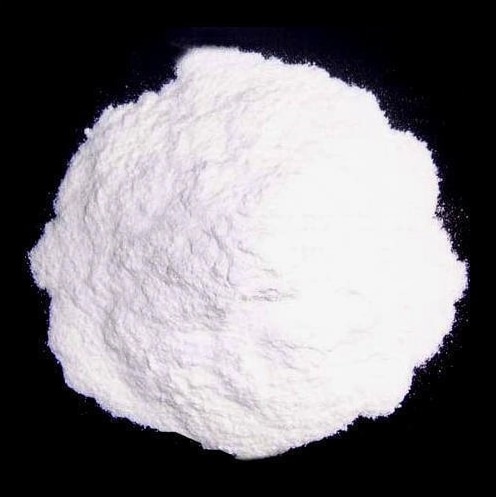 | Pharmaceutical Grade : BP/EP/USP Synonyms: Calcium Acetate. CAS No.: 62-54-4 Molecular Weight: 158.17 Chemical Formula: (CH3COO)2Ca Product Codes: 948... View product → |
A Vadodara sourcing checklist for continuity and compliance
The lowest quote is not the safest continuity choice. Compare a calcium acetate manufacturer in Gujarat against the controls that protect moisture, identity, delivery and repeat-batch performance—not geography alone.
| Criterion | What to compare | Warning sign |
|---|---|---|
| Packaging | Sealed, moisture-resistant inner liner; tamper-evident outer pack; pack size, net weight and labelling match your specification | Thin or openable bags, unclear closure system, or no packaging qualification |
| Storage | Water-content data, defined temperature and humidity limits, palletisation and protection from Gujarat’s warm, humid distribution conditions | “Store dry” with no measurable conditions or excursion procedure |
| Logistics | Replenishment lead time to Vadodara, dispatch records, transport controls, export routes and approved alternate carriers | One carrier, no safety stock, or delivery dates given without evidence |
| Repeat batches | Assay, water, impurities, particle-size data, method validation, batch traceability and retention samples across multiple lots | One certificate of analysis offered without trend data |
| Supply risk | Raw-material source, dual sourcing, change-control notice period, deviation and OOS investigation process | No approved backup, opaque source changes or informal notifications |
Ask for the site qualification package before approval:
- Current GMP status, manufacturing licence and recent inspection outcome
- Three or more consecutive batch records or trend summaries against your specification
- Packaging specification, storage-monitoring records and transport-excursion procedure
- Written commitments for change control, OOS handling, recalls and retention-sample access
- A realistic lead time, minimum order quantity, safety-stock plan and escalation contact
These checks show whether calcium acetate for benefits pharmaceutical manufacturing in Vadodara means dependable production support or only a convenient label. Reassess the supplier after every major process, raw-material or packaging change.
Frequently asked questions
How does calcium acetate work as a pharmaceutical phosphate binder?
In the gastrointestinal tract, calcium acetate reacts with dietary phosphate to form relatively insoluble calcium phosphate, reducing phosphate absorption.
How should manufacturers compare calcium acetate with other calcium salts?
Compare elemental calcium content, phosphate-binding performance, dose requirements, formulation properties, tolerability and applicable quality specifications.
Which incoming-quality checks matter for pharmaceutical calcium acetate?
Review the supplier’s certificate of analysis and test identity, assay, impurities, moisture, appearance, particle characteristics and microbiological quality against your specification.
How can you qualify a calcium acetate supplier in Vadodara?
Verify manufacturing and pharmaceutical licences, audit quality systems, confirm batch traceability, inspect packaging and documentation, and assess supply continuity.
Keywords