Replacing sodium chloride with potassium chloride is a formulation decision, not a simple ingredient swap. You need to match the material to the food application, test its sensory and process effects, verify each lot’s documentation, and compare suppliers on delivered performance rather than price alone.
Key takeaways
- Blend potassium chloride with sodium chloride instead of replacing salt gram for gram.
- Run sensory tests to control bitter or metallic aftertaste at each replacement level.
- Check food-grade identity, assay, contaminants, batch number and test methods on the COA.
- Compare suppliers on documentation, packaging, lot consistency and delivery capability—not crystal appearance.
Where food manufacturers use potassium chloride—and what changes in the product
Potassium chloride is used to lower sodium in seasoning blends, snack coatings, sauces, soups, processed meats, bakery mixes, dairy products and electrolyte beverages. It is usually blended with sodium chloride rather than substituted gram for gram, because potassium chloride contributes saltiness but also a bitter or metallic note as its proportion rises.
| Application | Why manufacturers use it | Product change to expect |
|---|---|---|
| Seasoning systems | Reduce sodium in spice blends and snack coatings | Bitterness can appear after cooking or on the finish |
| Bakery formulations | Lower sodium in bread, crackers and mixes | Dough handling, yeast activity and browning need checking |
| Processed foods | Adjust sodium in soups, sauces and ready meals | Flavour balance and preservation performance can shift |
| Dairy products | Reduce sodium in cheese, spreads and cultured foods | Texture, fermentation and aged flavour may change |
| Beverages | Supply potassium in electrolyte products | Solubility, acidity and aftertaste affect acceptance |
Set the replacement level through pilot batches, not a one-to-one calculation. Compare several ratios against the existing formula and check taste immediately and after storage, along with texture, fermentation, water activity, preservation and processing performance.
Flavour masking, acids, herbs or umami ingredients can soften the note, but they do not make potassium chloride a sensory equivalent of sodium chloride.
A potassium chloride food grade supplier should identify the material as food additive INS 508 and provide a specification for the intended food use. Confirm that the product category and use level comply with current Indian food-additive rules; a white crystal, a low price or an industrial assay does not prove food suitability.
How to set a replacement level without creating a bitter aftertaste
A 1:1 swap is a starting hypothesis, not a finished recipe. Potassium chloride can add bitter or metallic notes, while removing sodium chloride changes water activity, protein functionality, fermentation and texture. Set the sodium-reduction target first, then test the replacement in the actual product.
1. Calculate replacement as a percentage of the total salt blend, not as a direct sodium calculation. Screen 25%, 50% and 75% potassium chloride replacement against the unchanged control, keeping total salt mass and all other ingredients recorded.
2. Make pilot batches using production-scale mixing order, hydration time, fermentation, baking, cooking or filling conditions. A blend that tastes acceptable in a dry sample can behave differently after heating, storage or contact with fat and protein.
3. Run a blind sensory test at the intended serving temperature. Score saltiness, bitterness, metallic flavour, aftertaste and overall acceptability; test flavour masking only after identifying the highest acceptable replacement level.
4. Measure texture and processing results against the control. Record dough handling, gel strength, viscosity, water separation, yield, fermentation time and cooking loss where those properties apply.
5. Validate preservation separately. Measure pH and water activity, then complete product-specific microbiological and shelf-life testing; do not infer safety from sodium reduction alone.
Before you buy potassium chloride for food manufacturing, freeze the approved ratio, ingredient interactions, test conditions and acceptance limits in the product specification. Recheck them after any change in grade, particle size or supplier.
Food grade is a purchasing requirement, not a white crystal appearance
A white crystal proves only identity and appearance, not food suitability. Potassium chloride for a seasoning blend must be sold against a food-grade specification, with the intended food use checked separately under Indian rules.
Use this purchasing checklist:
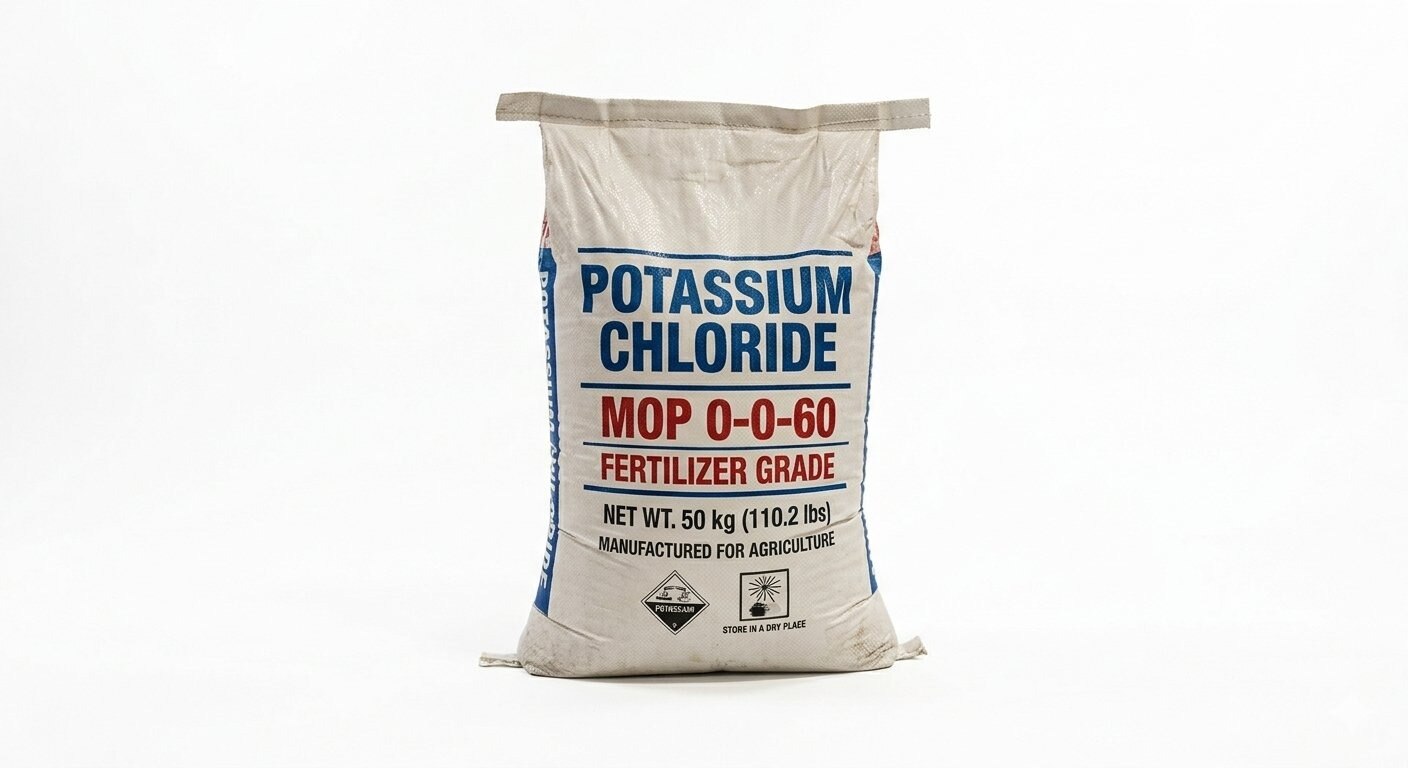
- Confirm the label, specification and invoice identify food-grade potassium chloride, not fertilizer, technical or industrial material. Fertilizer grade is made for agricultural nutrient supply; technical grade may suit manufacturing processes, but neither designation authorises addition to food.
- Do not treat laboratory grade as food grade. Laboratory material is controlled for analytical performance, while pharmaceutical grade follows a drug monograph. A pharmaceutical or laboratory certificate does not prove compliance with food-additive requirements, and a food-grade certificate does not prove USP or Ph. Eur. compliance.
- Ask the potassium chloride food grade supplier to state the additive identity as INS 508 and provide the manufacturing or packing site, lot traceability and food-business licence details. A distributor should identify the original site rather than describe regional resale as manufacture.
- Check the exact product category, function and proposed use level against the current Food Safety and Standards (Food Products Standards and Food Additives) Regulations. INS 508 is not blanket permission for every Indian food or any concentration.
- Reject material whose documents mention fertilizer, feed, reagent or industrial use, or whose specification omits food application. Confirm the lot before production, because later testing cannot turn an unsuitable grade into an approved ingredient.
What to verify on the certificate of analysis before accepting a lot
Accept a lot only when its dated certificate of analysis identifies the product as food grade and matches your approved specification. The document must name the manufacturer or packing site, lot number, test date, and applicable test methods—not just repeat catalogue values.
Request these records and check these results:
- Assay: confirm the actual potassium chloride result, specification limit, and basis reported, such as anhydrous or as-is.
- Moisture: compare the actual value with your limit because moisture uptake promotes caking and changes handling.
- Impurities: review heavy-metal or elemental-impurity results, with named limits for lead, arsenic, mercury or other elements in your specification.
- Traceability: match the lot on the certificate to the bag label, delivery note, pallet record and manufacturing or packing-site address.
- Storage evidence: inspect intact moisture-barrier packaging, dry storage, and the stated retest or expiry policy.
| Document | What it proves | What it does not prove |
|---|---|---|
| Dated lot-specific certificate | This lot met stated tests and limits | Compliance with every Indian food-use condition |
| Generic brochure | Product identity and claimed properties | That the delivered lot passed testing |
| Food-business licence or site record | The operation is authorised for its stated activity | That the material meets your specification |
| Pharmaceutical or laboratory monograph | Conformity to that compendium | Food-grade suitability |
Finally, verify that the formulation’s use of potassium chloride complies with its permitted food category and function under Indian rules; Codex lists it as INS 508, but a supplier certificate alone does not establish permitted use.
How to compare potassium chloride suppliers in Vadodara and across India
Choose the supplier that can prove control of the exact food-grade lot, not the one offering the lowest kilogram price. A search for potassium chloride supplier food industry in Vadodara should lead to records, samples and commercial terms you can audit.
| Criterion | Ask for | Reject or question |
|---|---|---|
| Grade | Food-grade specification, current certificate of analysis and intended-use statement | Fertilizer, technical, laboratory or pharmaceutical grade presented as interchangeable |
| Traceability | Batch number linking the pack, certificate, manufacturing or packing site and dispatch record | Generic certificates with no lot reference |
| Site control | Site address, food-business licence, incoming-material checks and change-control procedure | A claimed potassium chloride manufacturer in Vadodara that only resells material |
| Packaging | Intact moisture barrier, lot marking, pallet identification and retest policy | Torn sacks, damp cartons or missing storage instructions |
| Delivery | Written lead time, minimum order quantity, freight, GST and replacement process | A price that excludes material delivery conditions |
Ask whether the quoted specification is made or packed at the named site. For Halogens, request that distinction, along with the batch trail, before treating the company as a manufacturer rather than a distributor.
Compare landed cost, not price per kilogram. Record whether food-safe packaging, palletisation, freight and GST are included, then agree what happens if your incoming inspection fails.
For a potassium chloride supplier India buyers can rely on, confirm dry-storage controls and moisture exposure during transport; highly soluble material can cake before use. Keep an approved sample, inspect every delivery and require written notice before a specification, site or packaging change.
Related product
 | Speciality Chemicals (KCl) is an inorganic chemical compound consisting of potassium and chlorine. View product → |
Frequently asked questions
How should food manufacturers replace sodium chloride with potassium chloride?
Use a blend rather than a gram-for-gram substitution, then test saltiness, bitterness, metallic notes, texture and shelf stability in the finished product.
How can you reduce potassium chloride’s bitter aftertaste?
Increase the replacement level gradually, evaluate the complete formulation, and use sensory testing to identify the highest acceptable proportion for that product.
What should a potassium chloride food-grade certificate of analysis include?
Check the product identity, assay, moisture or loss on drying, impurity limits, heavy metals or other specified contaminants, batch number, test date and named analytical methods.
How should you compare potassium chloride suppliers in Vadodara and India?
Compare food-grade documentation, lot consistency, pack sizes, traceability, lead times, export or domestic supply capability and technical support alongside price.
Keywords