BHA protects oxidation-sensitive oils, fats, waxes and lipid-based active ingredients, but it does not preserve water-based medicines against microbial growth. By the end, you will know which dosage forms can use it, how to incorporate and test it, when another antioxidant is better, and which quality documents to request from an Indian supplier.
Key takeaways
- Use BHA to protect oxidation-sensitive oils, fats, waxes and lipid-phase excipients.
- Select BHA after identifying the formulation phase and its oxidation pathway.
- Establish concentration through peroxide, rancidity, colour and stability testing.
- Verify grade, assay, impurity limits, batch documents and packaging before purchase.
What BHA does in pharmaceutical formulations
BHA solves oxidation in the lipid phase: its phenolic group interrupts free-radical chain reactions before they consume oils, fats, waxes or other oxidation-sensitive excipients. This slows peroxide formation, rancid odours, colour change and degradation of oxidation-sensitive ingredients.
BHA is practically insoluble in water, so its performance depends on where it partitions in the formulation, not on the name “BHA” alone.
| Dosage form | Where BHA acts | Practical purpose |
|---|---|---|
| Soft-gel or gelatin-capsule fills | Oil or lipid fill | Protects unsaturated oils and oxidation-sensitive dissolved ingredients |
| Oil-based oral preparations | Continuous oil phase | Slows rancidity and oxidative loss during storage |
| Ointments and creams | Oil phase or lipid base | Protects fatty excipients and active ingredients from oxidation |
| Suppository bases | Fatty or wax-containing base | Reduces oxidative deterioration of the base and incorporated ingredients |
| Wax-containing and anhydrous products | Oils, waxes and other non-aqueous excipients | Extends oxidative stability where oxygen-sensitive lipids are present |
These are the main butylated hydroxy anisole uses and practical BHA pharmaceutical applications. The material is an isomer mixture of 2-tert-butyl-4-methoxyphenol and 3-tert-butyl-4-methoxyphenol, so the specification should identify that mixture.
BHA is not an antimicrobial preservative. It does not prevent microbial growth in an aqueous product and cannot replace a preservative system. An entirely water-based formulation needs a suitable water-phase antioxidant or another strategy; adding undissolved BHA will not provide reliable protection.
How to select and incorporate BHA by formulation phase
BHA is practically insoluble in water, so adding it directly to an aqueous phase can create undissolved particles, uneven distribution and weak antioxidant protection. Butylated hydroxy anisole uses are therefore concentrated in oil-rich or anhydrous systems, not as a substitute for a water-phase antioxidant.
1. For anhydrous oils, soft-gel fills, ointments, suppository bases and wax-containing products, dissolve BHA completely in the selected oil, compatible organic solvent or molten excipient before adding the remaining ingredients.
Keep the temperature only as high as needed for dissolution, minimise air entrainment and avoid pouring the entire amount into one small region, which creates local concentration spikes.
2. For emulsions, add the pre-dissolved BHA to the oil phase before emulsification. This protects oxidation-sensitive oil droplets; the surfactant system and oil-water interface also influence where BHA partitions. Confirm that homogenisation, heating and cooling do not cause precipitation, capsule-shell damage or incompatibility with the API or excipients.
3. For an entirely aqueous product, do not expect BHA in the oil phase to protect the water phase. Select a suitable water-soluble antioxidant or a different oxygen-control strategy after checking API and excipient compatibility.
BHA pharmaceutical applications require process confirmation, not just an ingredient decision. Test the actual sequence through heating, homogenisation, deaeration and filling, then compare antioxidant performance and inspect the finished product for colour, particles, phase separation and shell changes.
How to establish the effective BHA concentration
Treat 0.005%–0.02% w/w or w/v as development points, not a universal BHA dosage. The effective concentration depends on the oil or API, oxygen exposure, light, temperature, processing and packaging.
Compare matched, complete batches with and without BHA in forced-oxidation studies. Track the indicators that show whether the finished product remains protected:
| Indicator | What to measure | Failure signal |
|---|---|---|
| Peroxide value | Growth in an oil phase | Rapid increase |
| Chemical stability | API assay and oxidative degradants | Assay loss or degradant formation |
| Appearance and odour | Colour and odour during storage | Darkening or rancid odour |
| Physical stability | Viscosity and emulsion structure | Thickening, thinning or phase separation |
| Dosage-form integrity | Capsule and suppository condition | Brittleness, leakage, deformation or softening |
Select the lowest level that controls these changes, then confirm it in accelerated and long-term stability studies. Test the intended packaging configuration under the relevant oxygen, light and temperature conditions; a formulation in an open vial does not represent a sealed blister, bottle or tube.
An antioxidant assay only proves that BHA is present. It does not prove protection in the product. Increasing BHA can fail to improve stability when oxygen ingress, trace metals, light or an unsuitable package drives the oxidation. These formulation-specific studies make bha pharmaceutical applications defensible rather than based on a copied concentration.
How BHA compares with other antioxidant strategies
BHA is the best choice when oxidation starts in an oil-rich phase and its sensory profile, volatility and compatibility fit the finished product. These butylated hydroxy anisole uses include lipid fills, ointment bases and other systems where a low-level chain-breaking antioxidant protects unsaturated excipients or APIs.
| Option | Affinity and location | Sensory, volatility and compatibility | When to select |
|---|---|---|---|
| BHA | Lipophilic; oil phase and interfaces | Low volatility; distinct antioxidant profile; not interchangeable with BHT | Lipid-rich products with supporting stability data |
| BHT | More strongly oil-soluble; lipid phase | Low volatility, different sensory and excipient compatibility | Only after separate compatibility and stability testing |
| Tocopherols | Lipid-soluble; oil phase | Low volatility; may suit natural-oil systems | When the oil and route support tocopherol precedent |
| Propyl gallate | More polar; needs suitable solvent or phase placement | Low volatility; can require different processing | When its solubility and API compatibility outperform BHA |
| Ascorbyl palmitate | Amphiphilic; interfaces and lipid phase | Low volatility; dispersion and heat history matter | When interfacial protection or a combination is justified |
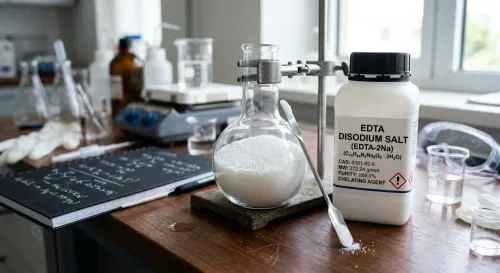
| Disodium EDTA | Water-soluble chelator, not a chain-breaker | Targets trace metals, not radicals | Add for metal-catalysed oxidation; it does not replace an antioxidant |
For bha pharmaceutical applications, check the API, excipients, capsule shell, process and packaging together. Review monographs, route-specific precedent and target-market rules: an FDA Inactive Ingredient Database entry proves precedent, not a universal maximum-use approval, while 21 CFR 172.110 food authorization does not establish pharmaceutical suitability.
- A monograph or market prohibits BHA.
- The product is entirely aqueous.
- Metals, light or package oxygen drive oxidation.
- Another combination gives better finished-product stability.
What to verify when sourcing pharmaceutical BHA in Vadodara
Batch approval starts with the formulation and target market, not a supplier’s location. For butylated hydroxy anisole pharmaceutical applications in Vadodara, confirm the dosage-form specification, route of administration, applicable pharmacopoeial or customer standard, and destination-market rules. BHA pharmaceutical grade India is a purchasing description, not a substitute for those decisions.
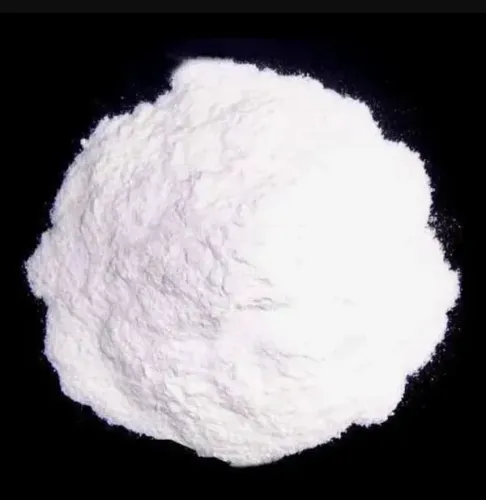
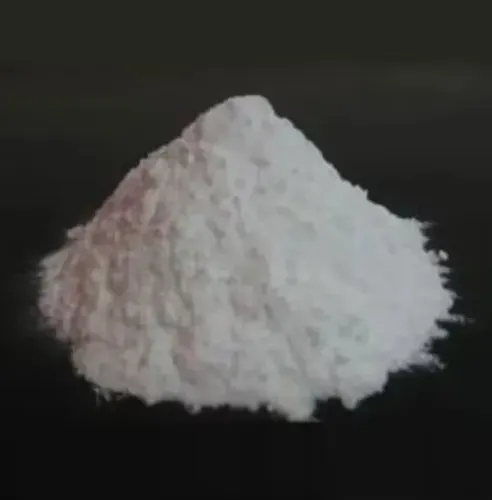
1. Ask a butylated hydroxy anisole supplier in Vadodara for a batch-specific certificate of analysis tied to the manufacturing lot. It must identify the 2-tert-butyl-4-methoxyphenol and 3-tert-butyl-4-methoxyphenol isomer mixture and report the agreed assay, impurity limits, identity test, melting range, moisture or loss-on-drying, and residue-on-ignition or sulfated-ash requirement.
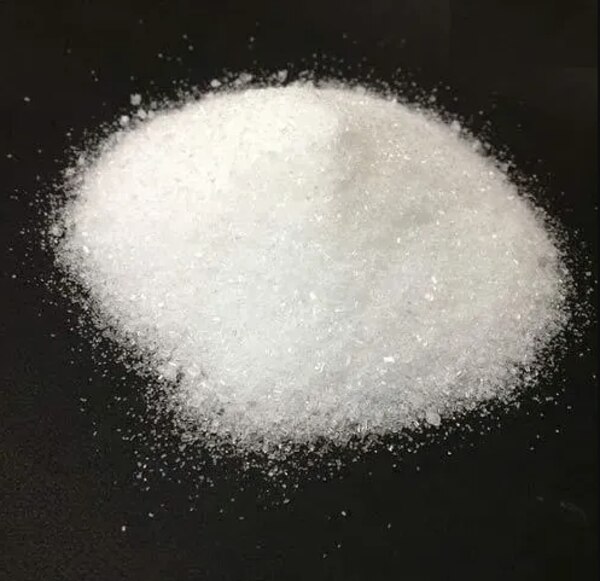
2. Request the safety data sheet, manufacturing-site details, packaging specification, retest period, and change-control notification policy. Check that the packaging protects the powder from moisture and that every shipment remains traceable to its lot and manufacturing site.
3. Obtain a residual-solvent statement and an elemental-impurity assessment aligned with ICH Q3C and ICH Q3D, including test methods and reporting basis where those attributes enter your specification. Request animal-origin and allergen declarations when your product risk assessment requires them.
For pharmaceutical applications in Vadodara, Halogens is relevant when it can demonstrate consistent isomer composition, controlled impurities, moisture-protective packaging, lot traceability, and dependable delivery into Gujarat’s manufacturing network. Local availability alone proves none of these controls.
Related product
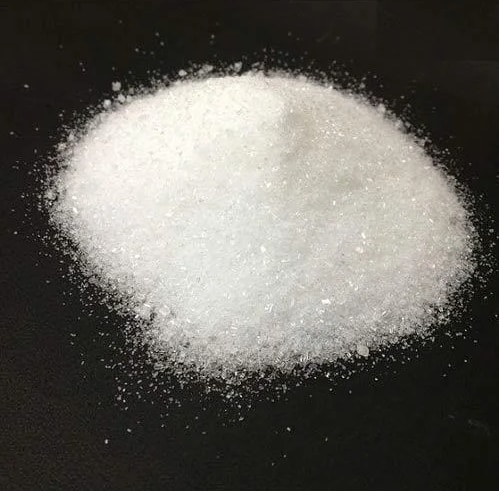 | Pharmaceutical Grade : IP/BP/EP/USP CAS no: 121-00-6 MSDS Name: Butylated hydroxyanisole Catalog Numbers: AC235230000, AC235231000, AC235235000, AC9524679 Synonyms:... View product → |
Frequently asked questions
What does BHA do in pharmaceutical formulations?
BHA interrupts free-radical chain reactions in the lipid phase, slowing peroxide formation, rancid odours, colour change and degradation of oxidation-sensitive ingredients.
How do you incorporate BHA into a pharmaceutical formulation?
Dissolve BHA into the oil, fat or wax phase before combining phases, and confirm that the selected process temperature, mixing time and packaging preserve uniform distribution.
How do you establish the effective BHA concentration?
Run a concentration study using the intended formulation and packaging, then compare peroxide value, odour, colour, active-ingredient assay and degradation products during stability testing.
How does BHA compare with other antioxidant strategies?
BHA protects the lipid phase, while alternatives such as tocopherols, BHT, ascorbyl palmitate, oxygen control and chelators address different oxidation pathways. Select based on compatibility, regulatory status and test results.
What should you verify when sourcing pharmaceutical BHA in Vadodara?
Request the specification or pharmacopoeial grade, assay, impurity limits, certificate of analysis, batch number, retest or expiry date, safety data sheet, packaging details and traceability records.
Keywords